
Home prices are slipping after years of increases, and if you've been waiting to buy, you're probably asking whether a seller's price cut is finally enough reason to make an offer. You don't want to wait forever for a perfect price, and you also don't want to spend your savings on a house you struggle to keep. The decision has to come down to a property you can actually afford to hold. A national headline will not tell you whether this particular house fits your budget.
Prefer to watch? Watch the full video on YouTube.
What Redfin actually reported
Redfin's weekly housing-market report, released November 5, 2026, covers homes listed or sold in the four weeks ending November 1. In that window, Redfin's national median sale price was $388,604, down 0.4% from a year earlier. Redfin said that marked the third straight week the median declined after three years of year-over-year increases.
That figure is Redfin's weekly median of recent sales, not every home-price index. The National Association of Realtors' October 2026 existing-home sales report, released November 12, put the median existing-home price at $416,700, up 0.4% from a year earlier. On that NAR measure, October was the 40th straight month of year-over-year gains. A small decline in Redfin's weekly median and a small gain in NAR's monthly median can show up at the same time. Neither number tells you what a specific house in your market is worth.
In the same Redfin report, 21.2% of listings, about one in five, had a price cut. 23.2% of homes still sold above the asking price, and the average sale-to-list ratio was 98.3%. I'd check recent local sales and ask the agent about the property before assuming the seller has run out of options.
What a $15,000 cut does to the loan payment
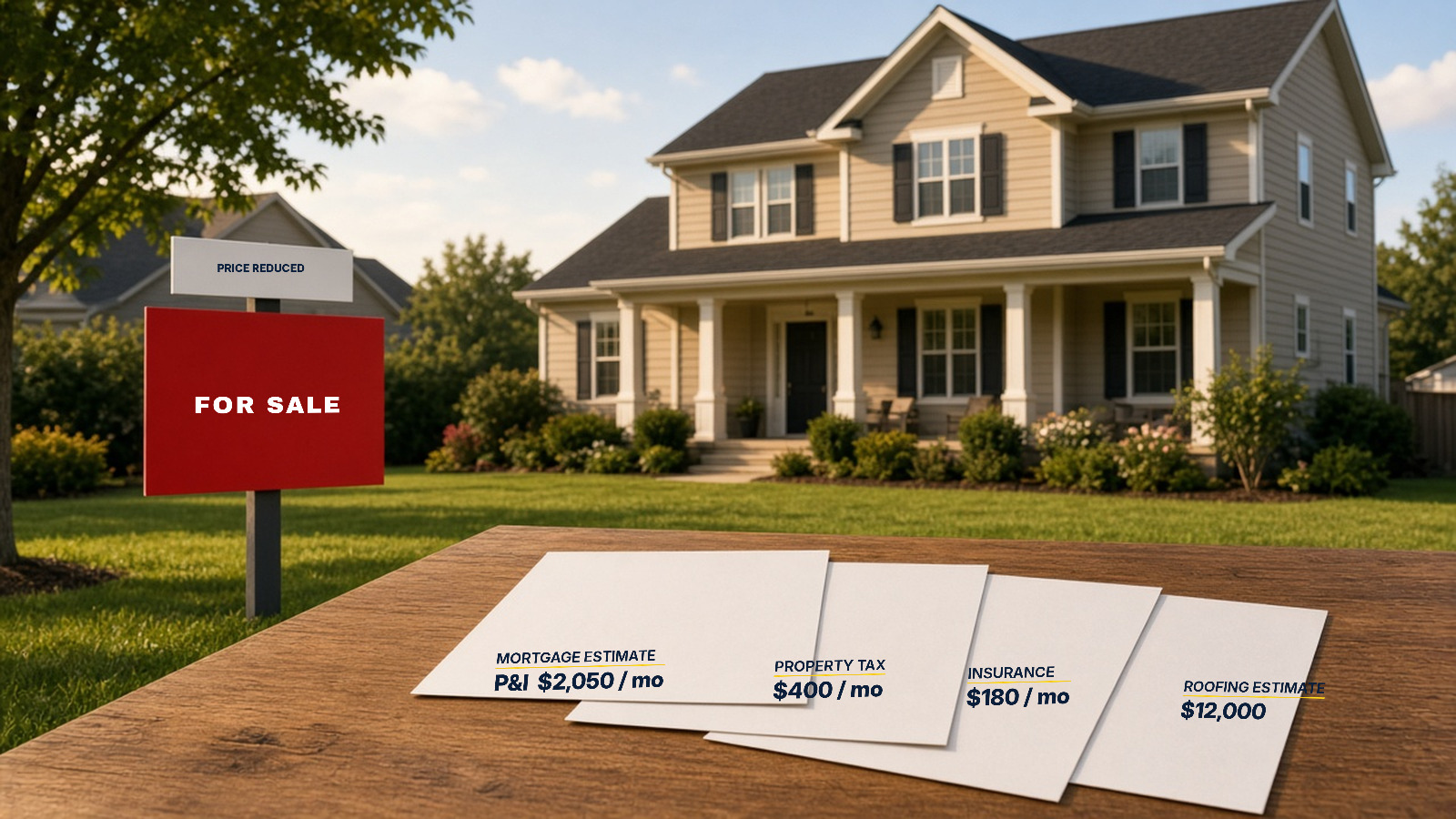
Imagine a hypothetical house you like. The seller drops the asking price from $400,000 to $385,000. Assume a 20% down payment on a 30-year loan at 7% interest, a rounded teaching rate close to recent averages. At the original $400,000 price, a $320,000 loan has principal and interest of about $2,130 a month. At $385,000, a $308,000 loan is about $2,050 a month. The $15,000 price cut saves about $80 a month on the loan payment.
The seller gave up $15,000 of asking price, and you'll save about $80 a month on principal and interest. That can feel like a small win, but the loan payment is only part of what the house costs you each month.
The house still has to fit your whole budget
Redfin's own monthly mortgage payment measure, built from its median sale price and the going rate, was $2,777 in that same report, 11.1% higher than a year earlier, even with the small decline in sale prices. A national price dip and an affordability problem can exist at the same time.
For the same hypothetical house, assume property taxes of $400 a month, insurance of $180, and a $200 maintenance reserve. At the reduced price, the house would cost about $2,830 a month with those amounts. If your housing budget is $2,750, the price cut still leaves you about $79 over budget.
If you want a fuller walk-through of the gap between a bank's pre-approval and a payment you can actually live with, my pre-approval budget test runs the whole monthly cost, not just principal and interest. And if you're trying to decide how far below list to go, how far below asking you can offer looks at sale-to-list evidence in the local market.
A roof can change the cash you need at closing
An inspection can also change the cash you need. Suppose the same hypothetical house needs a $12,000 roof, and you'd have $5,000 left after the purchase and closing costs. You're $7,000 short of the roof budget, before leaving yourself an emergency reserve.
I take the inspection findings and the roof quote back to the agent, but I wouldn't stop at asking for a lower price. If the seller owns the house free and clear, you could ask the seller to carry part of the price as a second loan at a lower rate than the bank. That means you borrow less from the bank, keep more cash for the roof, and lower your monthly payment. The seller can say no, but it's worth asking to see whether they have some flexibility. Compare each proposal with the monthly payment and the cash you'd have left.
If seller financing is new to you, how I bought a rental without a bank loan shows how a seller-carried note changes the payment, and the 100% seller-financing checklist covers due-on-sale and balloon risks when a seller finances more of the price.
When a price cut is worth an offer
A price cut is enough reason to investigate a house. The offer only makes sense if the local value, the full payment, and the repair budget work together. You don't need to buy a house just because the seller took less.
Take one real listing and run it like you were going to buy it:
- Check recent local sales and ask the agent what else is going on with the property.
- Run principal and interest, property taxes, insurance, and a maintenance reserve against your actual housing budget.
- Get inspection findings and repair quotes, and see how they change the cash you need at closing.
- Compare a lower price with a seller-carried second loan, and look at the monthly payment and the cash you'd have left under each proposal.
- Make an offer you can afford to hold.
The recap
- Redfin's weekly national median sale price was $388,604 for the four weeks ending November 1, 2026, down 0.4% year over year. NAR's October 2026 monthly median was still up 0.4%.
- About one in five Redfin listings had a price cut, and some homes still sold above asking.
- In a hypothetical example, a $15,000 cut on a $400,000 house, with 20% down at 7% for 30 years, saves about $80 a month on the loan payment.
- Taxes, insurance, and a maintenance reserve can still leave that house over a $2,750 monthly budget, and a $12,000 roof can leave you short on cash at closing.
- A price cut is a reason to investigate. The offer has to work on local value, the full payment, and the repair budget, and a seller-carried second loan is worth asking about.
The house, the price cut, the roof, the budget, and the cash amounts in this guide are a hypothetical teaching example, not a promise of results or a claim about a specific property. Loan payments assume 20% down on a 30-year loan at 7% interest and are rounded. Verify local sale prices, taxes, insurance, repair quotes, and loan terms on the actual house.
Get help running the full payment before you offer
Some sellers will say no to every request, but if you never make the ask, you'll never find a seller who's open to creating a solution that works for both of you. If you want help finding a house or a rental you can actually afford to hold, and learning how to structure an offer when a price cut isn't enough on its own, come join us in Commercial Real Estate 101 on Skool. Inside, we run the numbers together, check each other's assumptions, and work through seller-financing terms with other investors.
Pick a property, get the financing and repair quotes, and make an offer you can afford to hold.
Frequently asked questions
Are home prices falling?
Redfin's weekly national median sale price was $388,604 for the four weeks ending November 1, 2026, down 0.4% from a year earlier, the third straight weekly decline after three years of gains. NAR's October 2026 median existing-home price was still up 0.4% at $416,700, so neither number tells you what a specific house in your market is worth.
How much does a $15,000 price cut lower the monthly payment?
In the guide's hypothetical example, cutting a $400,000 house to $385,000 with 20% down on a 30-year loan at 7% saves about $80 a month on principal and interest. The loan payment drops from about $2,130 to about $2,050, and taxes, insurance and repairs are still on top of that.
How many homes have price cuts right now?
In Redfin's November 5, 2026 report, 21.2% of listings, about one in five, had a price cut. In the same report, 23.2% of homes still sold above asking, and the average sale-to-list ratio was 98.3%.
Is a price cut a good reason to make an offer on a house?
A price cut is a good reason to investigate a house, and the offer only makes sense if the local value, the full monthly payment and the repair budget work together. Run principal and interest, property taxes, insurance and a maintenance reserve against your real housing budget, and get repair quotes before you offer.
Can I ask the seller to carry part of the price instead of a bigger price cut?
If the seller owns the house free and clear, you can ask the seller to carry part of the price as a second loan at a lower rate than the bank. You borrow less from the bank, keep more cash for repairs and lower your monthly payment, and the seller can say no, but it's worth asking.